Seeing Life Through the Mirror of the DharmaHsi Lai Temple Hosts English Community Film Practice for Reflection and Cultivation
Report by Pan Qingxia, The Life News Agency, Los Angeles, USA
On October 12, Fo Guang Shan Hsi Lai Temple hosted an English-language Community of Practice (CoP) gathering themed “Seeing Through the Lens of the Dharma.” The event was jointly organized by the temple’s Local Community Education Group and the Hsi Lai Subchapter of the Buddha’s Light International Association (BLIA) Los Angeles Association. Approximately 60 English-speaking participants, including members of the Three Acts of Goodness Parent Program, gathered to watch short films, reflect on Buddhist teachings, and share ways to apply these insights in daily life.
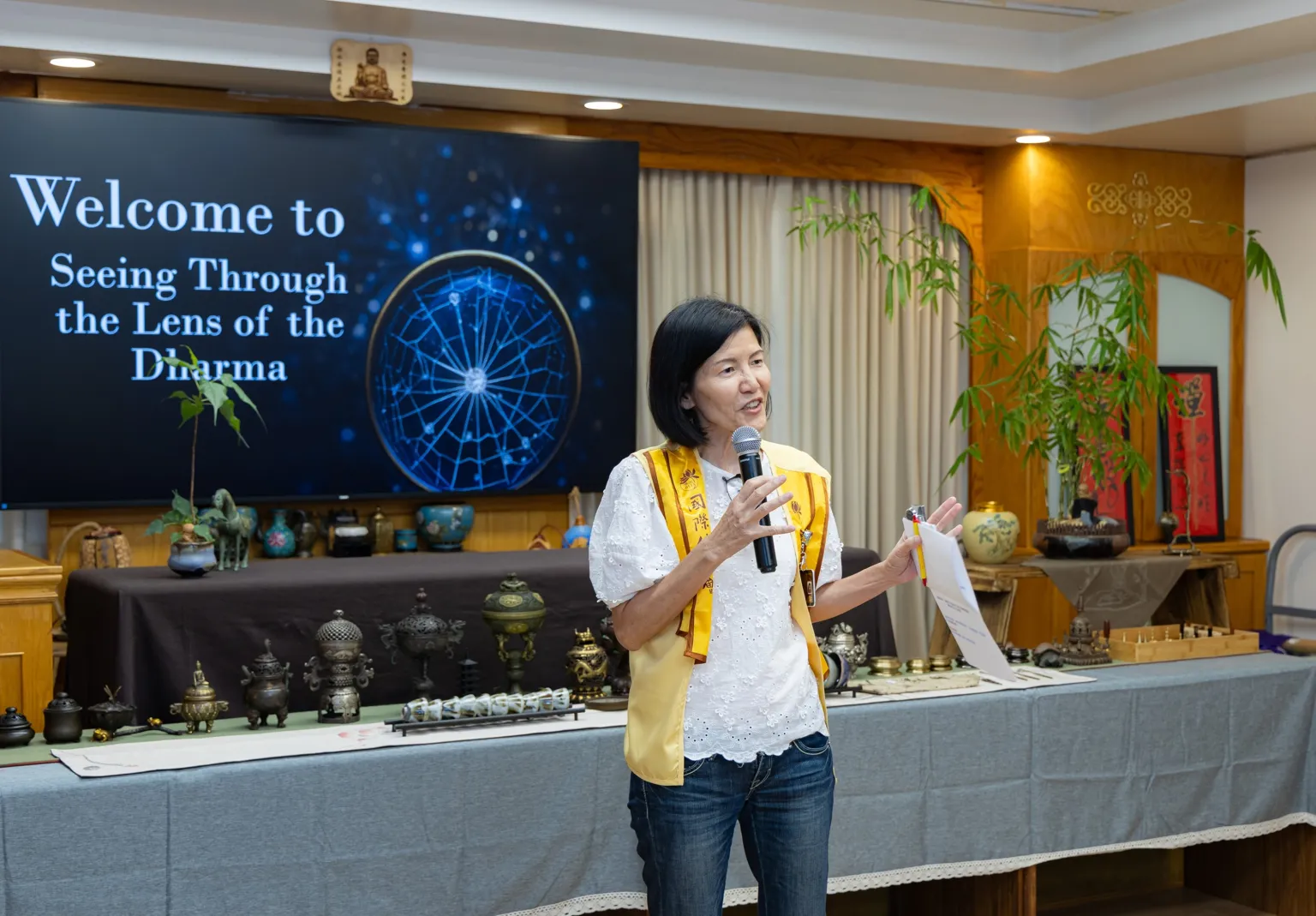
Tsai Yueh-Chin, President of the BLIA Los Angeles Association, welcomed participants and offered her blessings, wishing everyone joy in the Dharma. Lynette King, President of the Hsi Lai Subchapter, described the CoP as a family-like community. Through film appreciation, she noted, participants are able to pause amid busy lives, creating space to slow down, reflect, recalibrate, and explore how to bring the Dharma into everyday living.
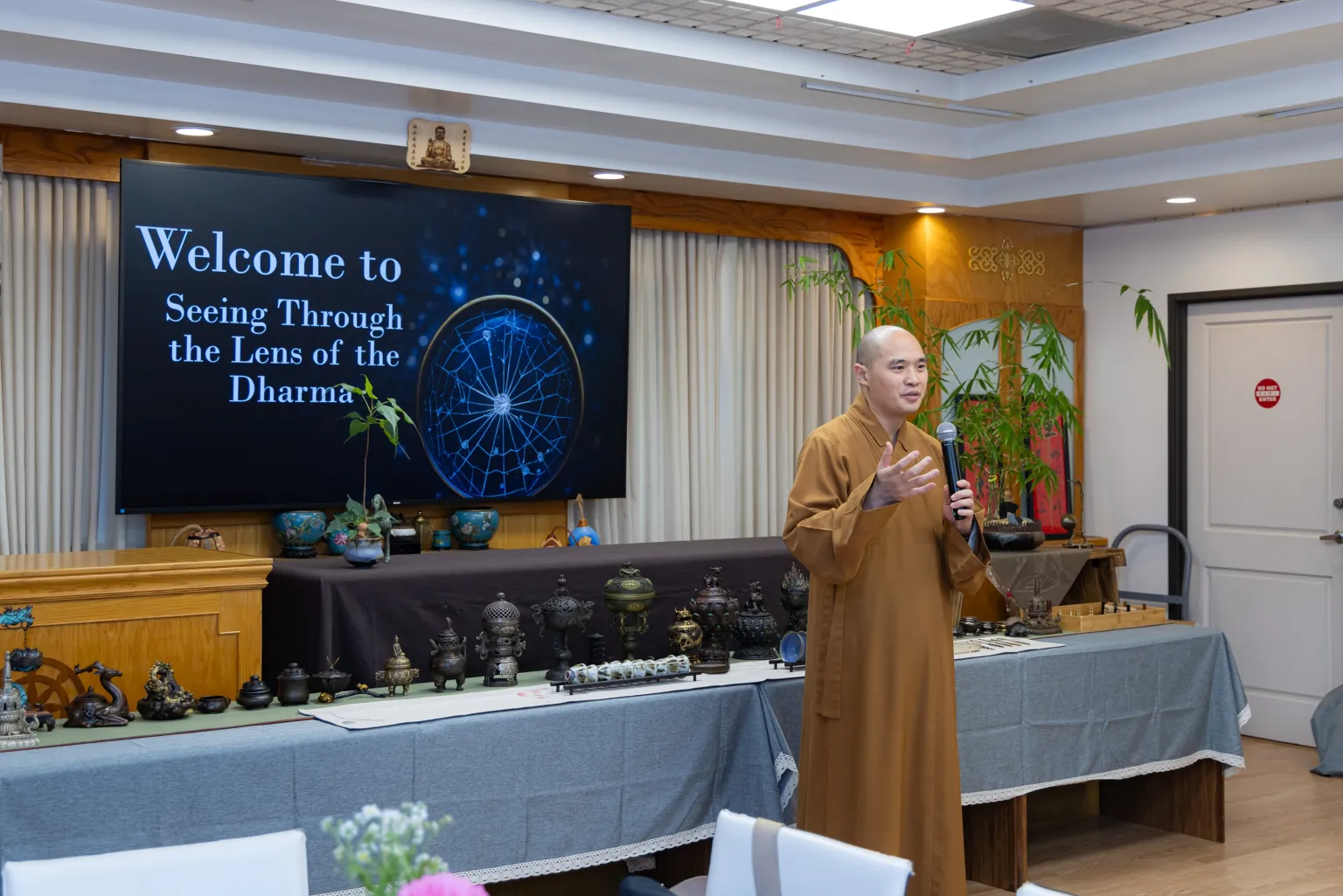
Quoting Fo Guang Shan founder Venerable Master Hsing Yun from Between Delusion and Awakening, Venerable Master Hsing Yun once taught: “Life itself is a stage. On this stage, everyone should be their own director—expressing themselves and bringing forth their talents. The brilliance of the performance ultimately depends on each individual.” Building on this message, Venerable Huicheng, guiding monastic of the Hsi Lai Subchapter and the Three Acts of Goodness Academy, explained that the quality of one’s “life movie” depends on personal vows and determination. When guided by the Dharma, one not only inspires oneself but also benefits others.
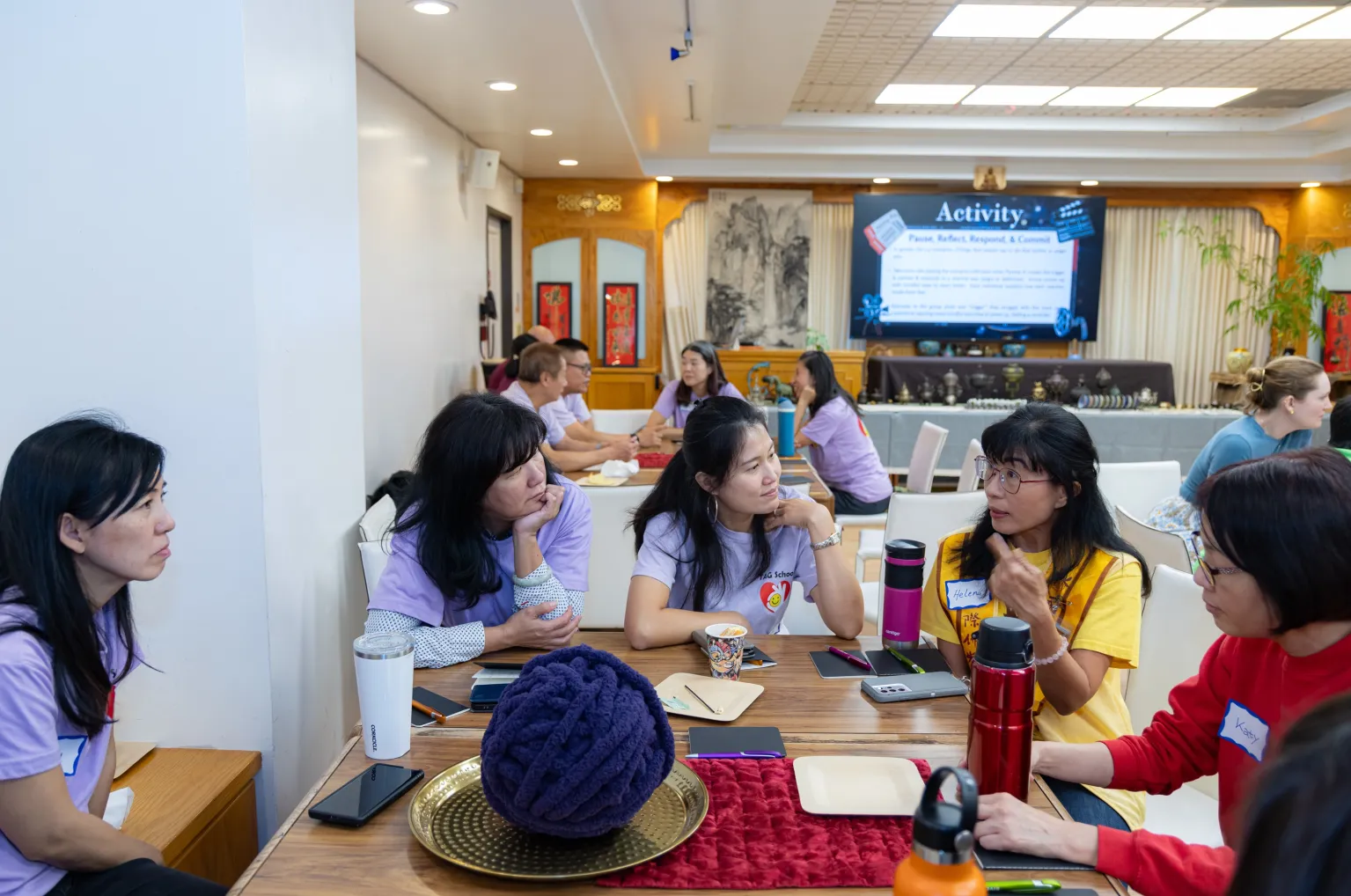
The animated short film, Magic Loop, conveyed the idea that although many things may seem to disappear, they are in fact transformed into new forms. Participants then took part in an interactive activity titled “The Thread of Change,” sharing personal experiences of change while passing yarn from one person to the next, gradually forming a web symbolizing human connection and growth.
Melissa Condit shared that the film illustrated the Buddhist principles of impermanence and letting go. Issac Wong reflected that facing change prompted him to examine his own capacity for tolerance. Joe Djuandi observed that fear of change often comes from remaining within one’s comfort zone, yet crises can also become turning points. Helen Chan shared that while changes in the workplace brought pressure, they also encouraged acceptance, adjustment, and self-reflection. Now in midlife, she decided to learn K-pop dance—popular among younger generations—finding joy in the process and earning admiration from her group.
Another animated short, Never React Again, explored emotional awareness in interpersonal interactions. The film encouraged participants not to be easily “triggered” by others, and to pause before responding by asking: “What response would I be proud of tomorrow?”
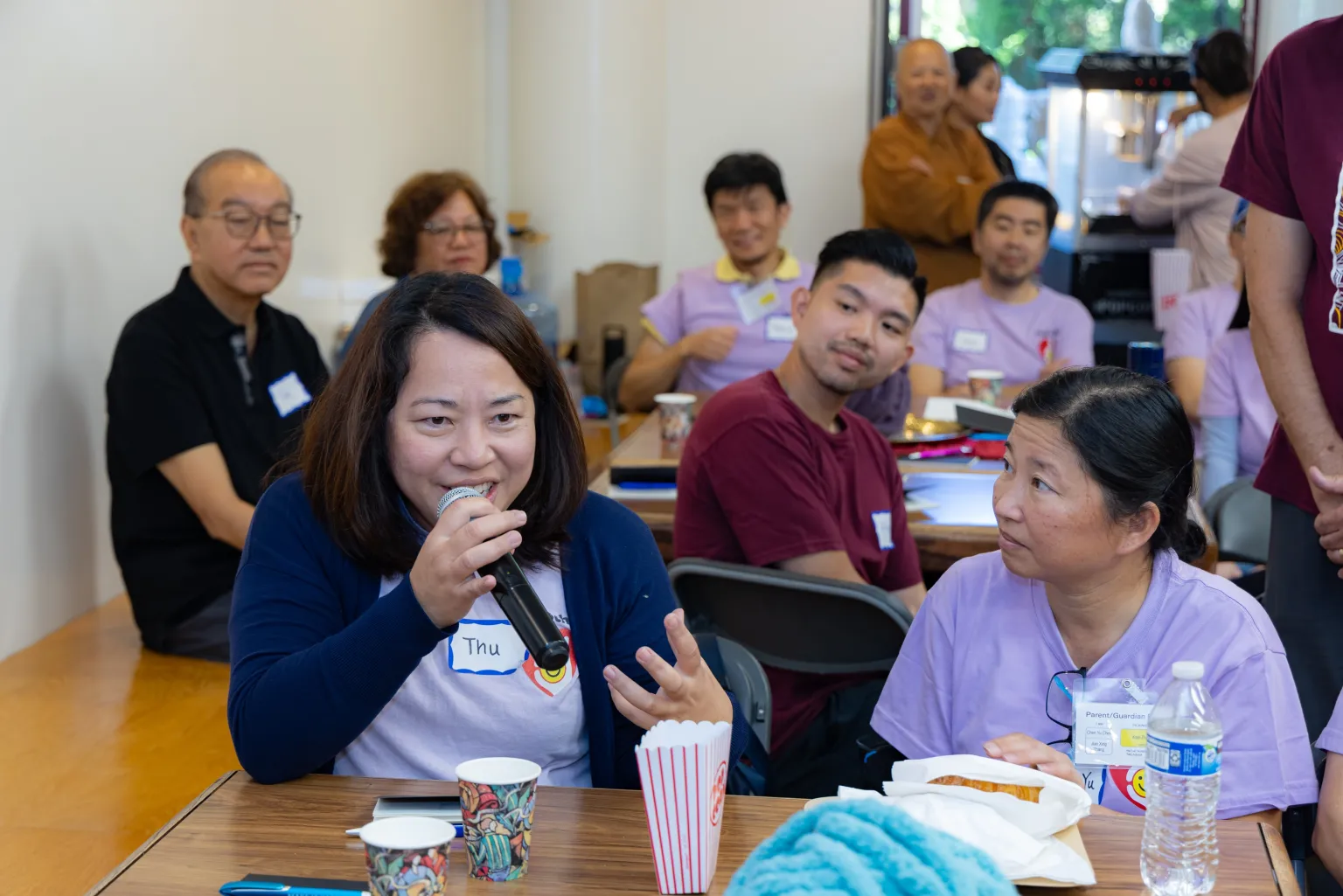
Participants then engaged in role-playing exercises, practicing how to find the Middle Way between suppressing emotions and reacting impulsively in situations that commonly provoke negative feelings. Thu Tran shared that she realized those closest to her were often the ones who triggered her strongest emotional reactions. Upon reflection, she recognized that this stemmed from care and expectation, and expressed her intention to continue practicing self-awareness and emotional regulation.
Photo Captions(Photos 01–10 by Zhang Zhicheng)
Group photo of all participants.
Tsai Yueh-Chin, President of the BLIA Los Angeles Association, delivers opening remarks, welcoming participants and offering blessings.
Lynette King, President of the Hsi Lai Subchapter, shares that the Community of Practice is like a family.
Venerable Huicheng, guiding monastic of the Hsi Lai Subchapter and the Three Acts of Goodness Academy, cites Venerable Master Hsing Yun’s teaching that “life itself is a stage.”
Through film appreciation, participants take time to pause, reflect, and explore how to apply the Dharma in daily life.
Participants take part in the interactive activity “The Thread of Change.”
Group members share personal experiences of facing change.
Melissa Condit shares that the film illustrates the Buddhist principles of impermanence and letting go.
Helen Chan reflects on workplace changes and how they led her to acceptance, adjustment, and renewed self-discovery.
Thu Tran shares insights on emotional reactions toward those closest to her and her ongoing practice of self-adjustment.