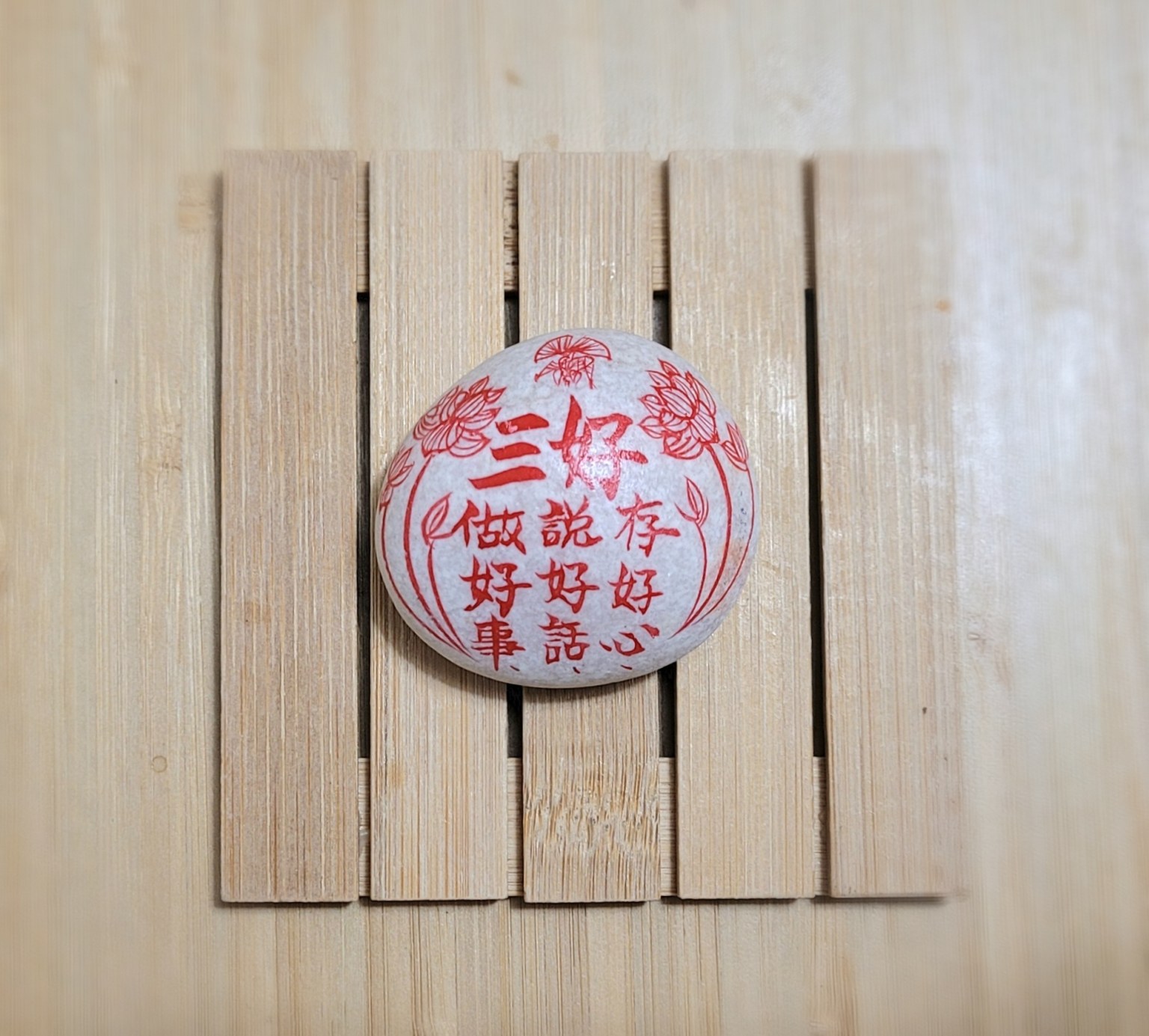
Chasing Goodness: A Pursuit of All Three|好心追追追 有三不缺一
【By Ching Pan from Hsi Lai Subchapter】Venerable Master Hsing Yun, the founder of the Fo Guang Shan (FGS) Buddhist Order, once wrote in the book Humble Table, Wise Fare:
“Speaking good words without doing good deeds renders those words meaningless. Doing good deeds without speaking good words makes those deeds insignificant.”
The Venerable Master’s teachings are simple yet profound. However, it made me wonder: why are “good thoughts” not explicitly mentioned as part of the Three Acts of Goodness in his teachings here? So, I began my journey of “Chasing Good Thoughts” to find an answer.
Friends shared their insights, suggesting that Venerable Master Hsing Yun’s teaching assumes that “thinking good thoughts” is a prerequisite. Without it, one cannot truly speak good words or do good deeds. Thus, the teaching focuses on the interplay between good words and good deeds, leaving “good thoughts” implied.
Yet, I couldn’t resist extending the thought further: “To speak good words without thinking good thoughts makes those words hollow. To do good deeds without thinking good thoughts makes those deeds meaningless.”
This led me to another question: are there people who believe they have “good thoughts” but are unwilling to speak good words or do good deeds?
A friend shared an observation: “Some people think practicing Buddhism doesn’t require effort. Why bother upholding precepts or chanting? As long as they believe their thoughts are good, that’s enough. However, such ‘good thoughts’ are often tinged with arrogance. These individuals may avoid taking action—or feel unable to—and yet perceive themselves as morally superior. Their so-called ‘good thoughts’ are like products with harmful additives: they may seem fine on the surface but ultimately cause harm.”
This prompted me to conclude: “To merely think good thoughts without expressing them in words or actions is nothing but hypocrisy.”
When I first took on the role of a subchapter president under Buddha’s Light International Association (BLIA) Los Angeles Chapter, the same friend warned me: “If your ‘good thoughts’ are forced and you fulfill your role reluctantly, then your good words and good deeds will be as futile as trying to carry water in a bamboo basket.”
I deeply resonate with this sentiment. I realized that I took on this role out of a sense of obligation—believing that if I were a good person, I should take on this position. No wonder I was overwhelmed with frustration. Upon reflecting after my term ended, I understood that my unhappiness stemmed from forcing myself into the role due to “good thoughts” rather than genuine willingness.
May I now strive diligently, ensuring that none of the Three Acts of Goodness, in their true essence, are ever lacking!
For those who believe that “a good thought is enough” and dismiss practices like upholding precepts or chanting as trivial formalities, I’d offer another teaching from Humble Table, Wise Fare:
“Worldly actions may be transient, but they are essential for spiritual progress. Conversely, clinging to transcendental truths may hinder clarity and wisdom.”
The teachings of Humble Table, Wise Fare are truly thought-provoking, making it a book worth pursuing.
Photo by Ching Pan
Caption: A stone bearing the Chinese words “Three Acts of Goodness,” written as a reminder of the Venerable Master’s teachings.